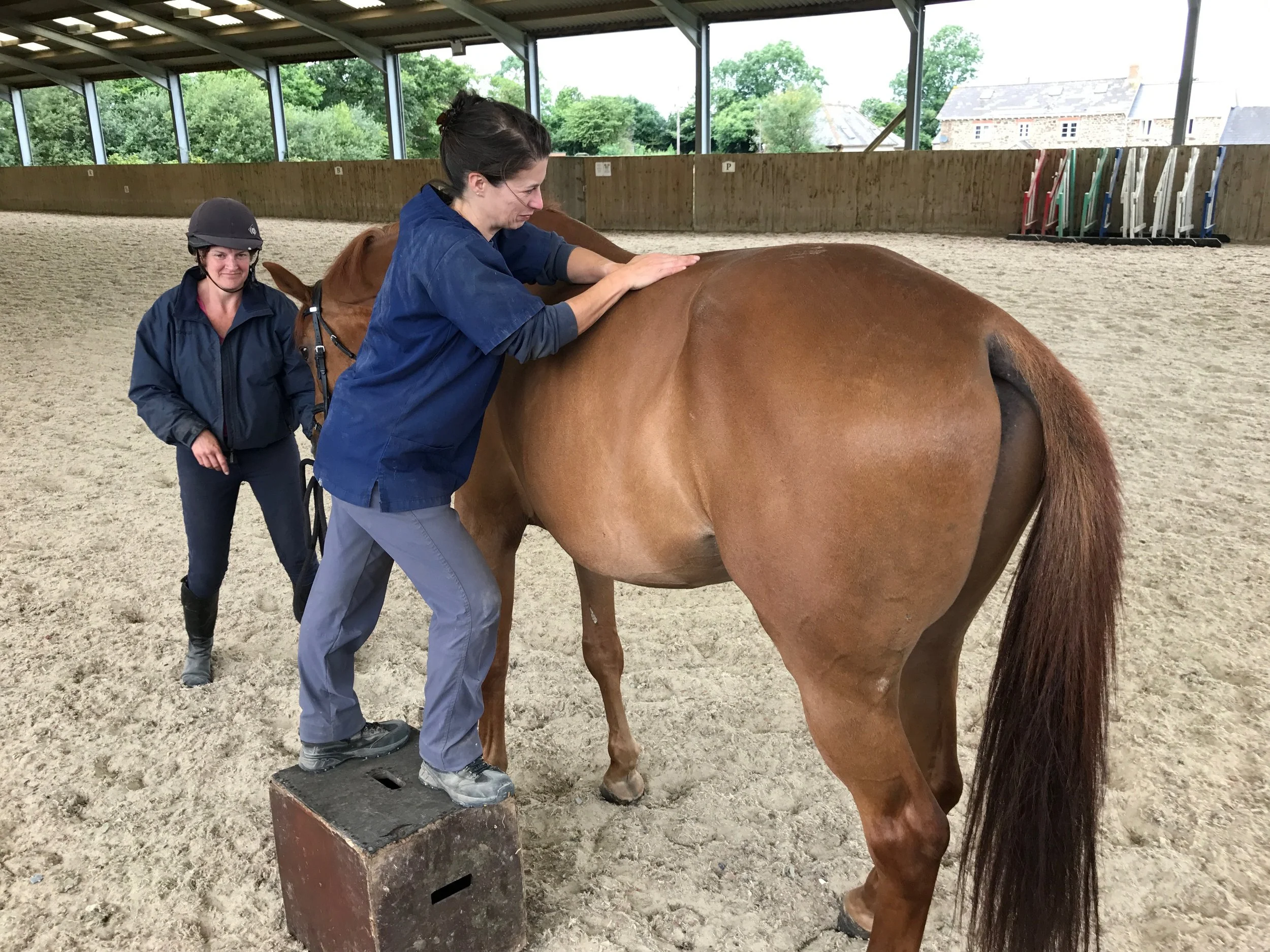
Veterinary Physiotherapy
Experienced veterinary musculoskeletal care for suppleness, mobility and performance. Fully Regulated (RAMP Registered) and insured
Not all horses are athletes, but they all need physical support to avoid compensations to help minimise day to day wear and tear
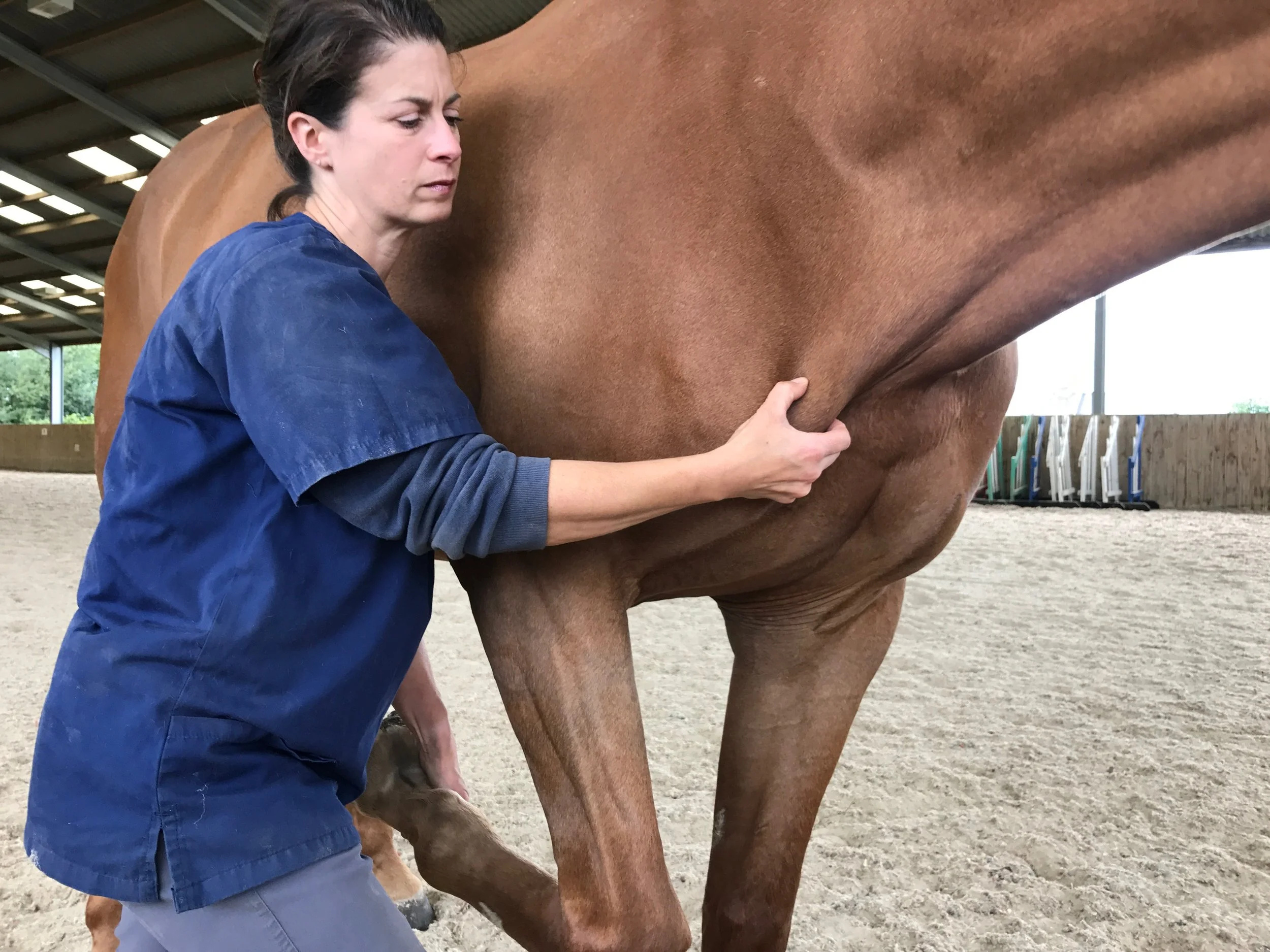
Signs that your horse may benefit from physiotherapy care:
Unexplained poor or reduced performance
Napping, rearing, bucking or similar resistances
Unexplained behavioural changes, unwillingness to co-operate
Difficulty with canter leads, poor engagement, collection or extension, toe dragging
Problems when jumping: refusals, knocking poles, short strides, jumping flat
Appearing sensitive to grooming or cold backed on mounting
Signs of stiffness or difficulty with lateral flexion (bending)
Physio treatments may identify issues which would benefit from follow up treatment by TECAR therapy, or an extended appointment may be booked to incorporate TECAR during the appointment at extra cost.
See FAQ for pricing.